Closed-Loop Marketing Systems for Pharma HCP Field Teams
Pharma field teams waste $20 billion annually on content reps never use.
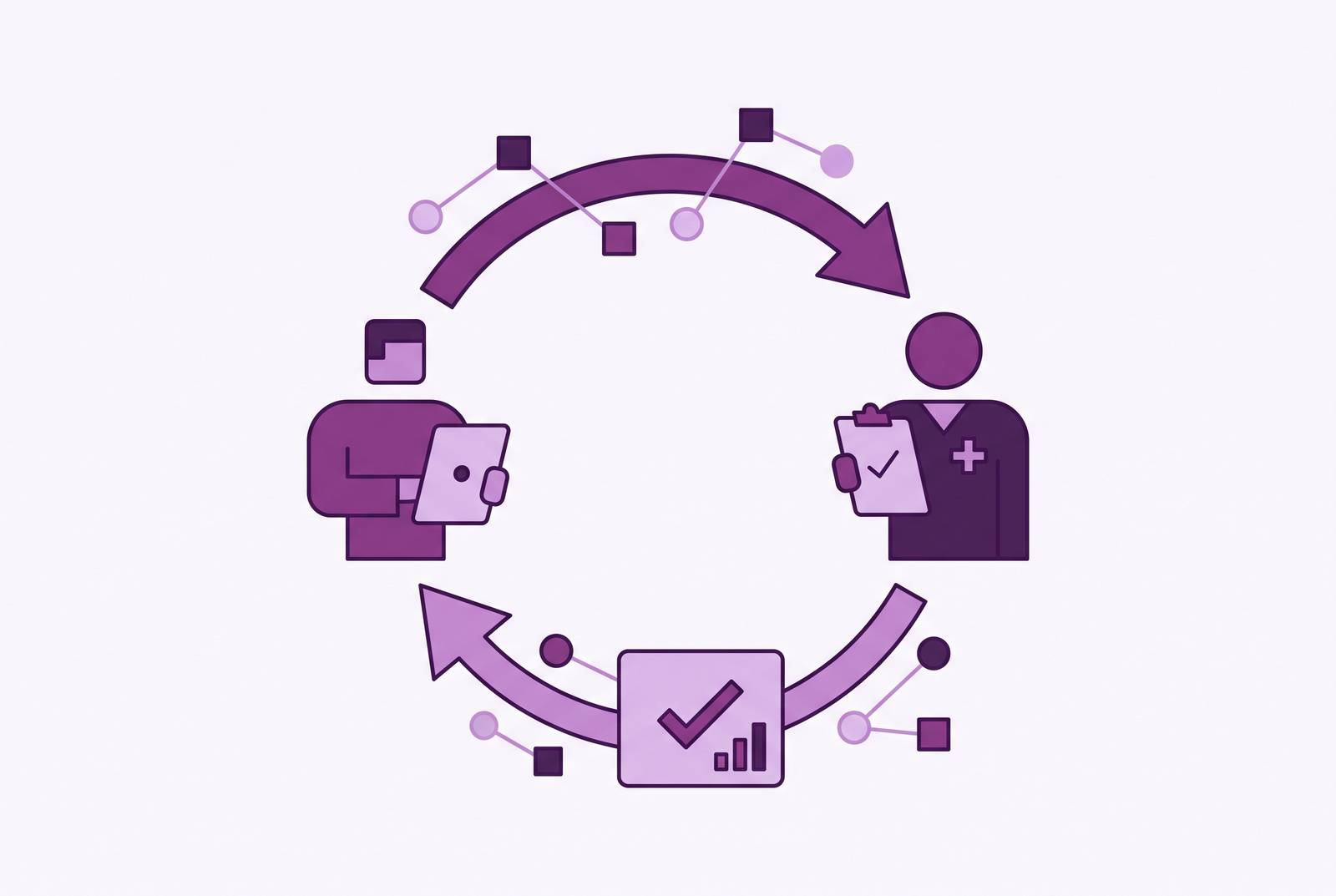
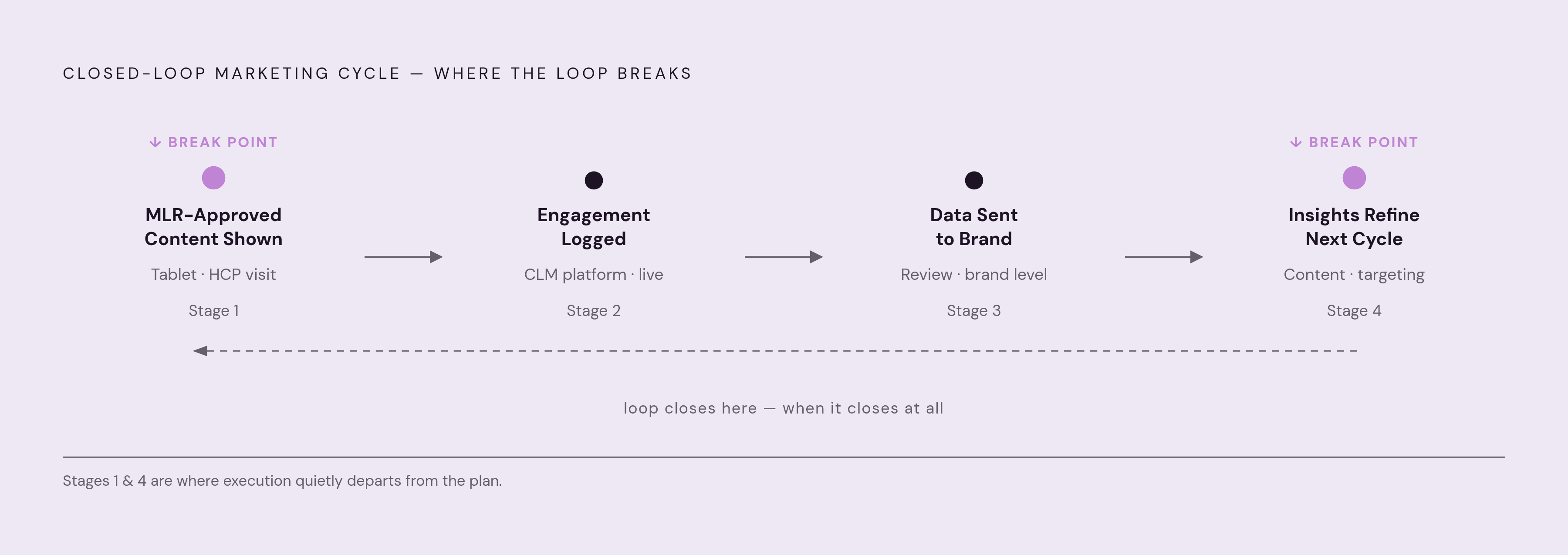
For pharma field teams, Closed-loop marketing, or CLM, follows a four-stage model: put MLR-approved content before HCPs, record engagement data live, send that data to the brand level for review, and use it before the call cycle to refine content and targeting. The approach works. What fails it, time and predictably again, are a couple of key stages: feedback closure and content production.
Walk through how it works. During a visit, a rep uses a tablet to show a physician a detail. The CLM platform logs the slides a rep used, how long each was open, skipped parts, and items tapped for more detail. That data should push the CRM and marketing planning closer together, narrowing what separates an HCP's actual responses from what the brand puts out after. When it functions, the process brings field learning into content strategy in weeks, not quarters. Most rollouts never get there because execution quietly drifts off course at content production and feedback closure. It's in content production and feedback closure that execution quietly departs from the plan. What follows unpacks both.
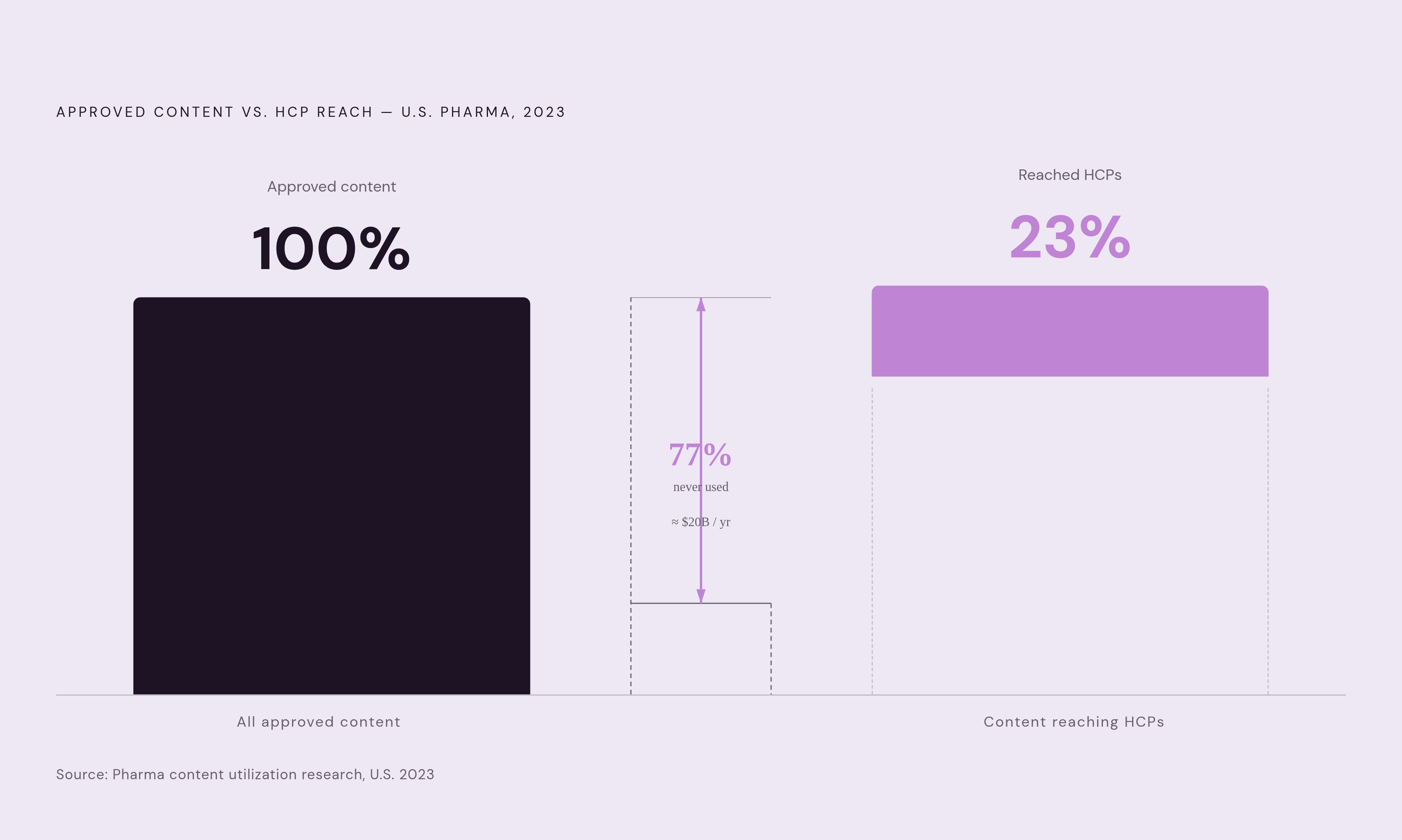
The content utilization problem: 77% of approved content never reaches an HCP
Veeva's Q2 2025 Pulse Field Trends Report, built on over 600 million HCP interactions from more than 80% of biopharma field teams, found that engagement driven by content more than doubles treatment uptake. It also found content is used in under half of HCP visits. That gap, between how seldom content gets used and what it achieves when it's used, sums up the trouble in miniature.
The supply side makes it even harder. In 2023, Pharma content volume grew 7% globally, with the United States alone up 29%, yet the sales network almost never touched 77% of approved content. In 2023, pharma content volume increased 7% worldwide and 29% across the U.S. on its own, yet the sales network barely uses 77% of approved content, a gap valued at around $20 billion annually in content HCPs never get. It’s no marketing rounding, but a structural failure: right hands aren’t getting the right asset at the right moment. It represents a structural failure to deliver the right asset to the right hands when the moment is right.
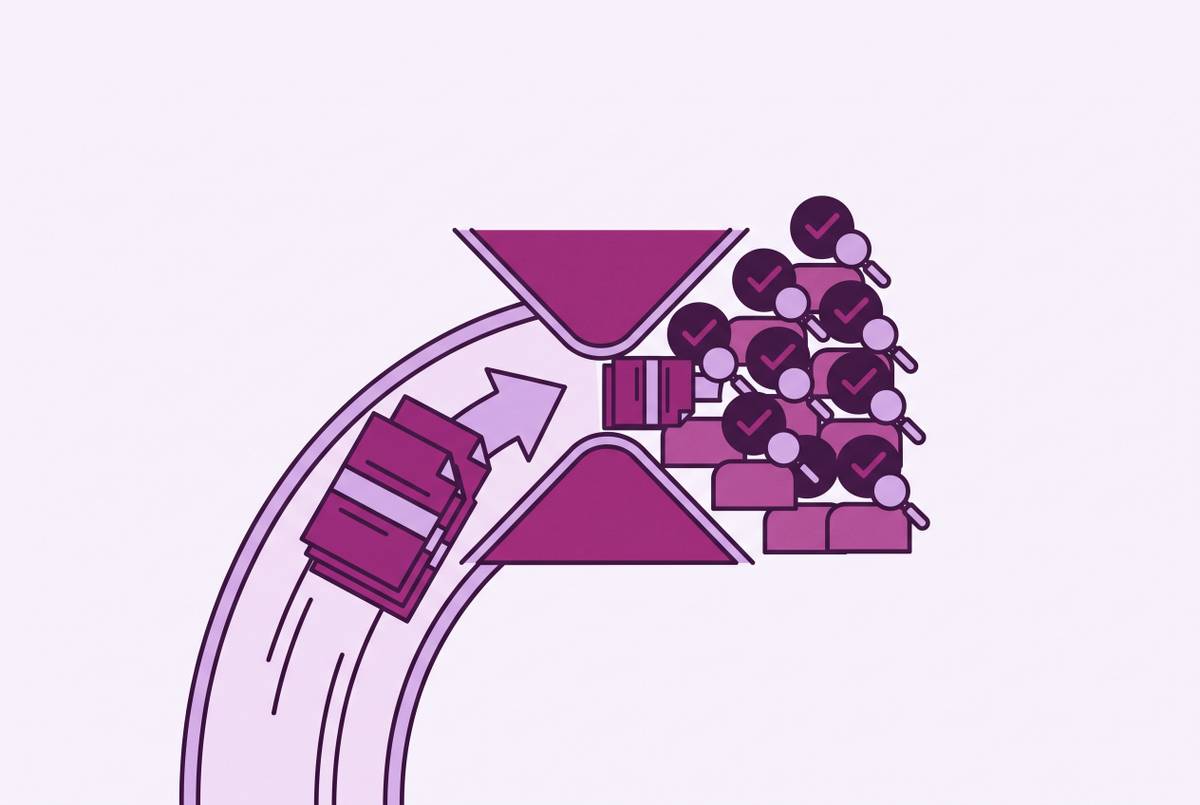
Reps aren't ignoring content because they're lazy. It shows up after its call cycle is over, it's generic so it helps nobody, or the rep has no way to locate it in ninety ticks before stepping into a doctor's office. All three point to one cause: content must go through the compliance review process before being used. Vodori and Indegene's 2024 data shows review cycles of 50 to 60 days for each asset at major pharma firms, with European figures around 20 days and roughly 1.3 revision cycles for each asset. Over the last five years, the amount of content going into MLR has nearly tripled. Triple the volume entering a review process that takes the same amount of time, and staying on track means making content generic plus reusable, precisely what no functioning CLM loop can use.
The data gives a hard reality check: pharma leaders, 80% of them, see their own outreach plans as strong. Just 35% of HCPs think pharma's customer-facing materials actually help them. A 45-point gap in self-perception is a symptom, not just a footnote. It points to companies tracking their own output instead of how HCPs actually receive it.
When one big content build takes too long, content ends up too broad, people skip it, and CLM tools track visits without proof of content use, since each part causes the following one.
The feedback closure problem: data recorded but never acted on
CRMs do a fine job logging that a visit took place. They’re mediocre, and can be outright awful, at connecting what reps covered, its length, what got used, and downstream prescribing. The fracture sits in that gap, between logging and connecting.
Veeva's research found HCPs are significantly more likely to prescribe when engagement is synchronized across touchpoints. Data covering synchronized in-person plus promotional touchpoints finds prescription likelihood improves with synchronized engagement. It's the highest-return lever across the setup, but it stays largely unused because the data showing impact never reaches the following planning cycle. It lives inside a CRM or CLM dashboard, marked "captured," but nobody upstream does anything. The loop is recorded. It never gets shut.
An oncology brand example illustrates the cost of this failure. The DTC effort, requiring a substantial investment, pulled in 47,000 site visits, yet under 30% of targeted physicians could answer simple efficacy points about the product. A notable share of willing patients did not receive a prescription. It fell 22% short of Q1 net Rx, with $4.2 million tied to the gap between promotion work and field understanding. Marketing and field operated on disconnected cycles with no common signal connecting them.
This isn't mostly a tech failure. HCP-facing teams and DTC teams commonly have their own budgets, analytics stacks, and calendars, while no CRM tool closes the gap organizational silos made in the first place. PulsePoint's Pharma Forward's 2026 report is explicit: HCP and DTC teams must set common KPIs before a push launches, not find them during the debrief after the campaign. Missing this data hurts as much as missing the audience.
Content production and feedback closure are both solvable fractures. What solving them actually requires is covered in the following four parts.
The stack for a CLM loop that works
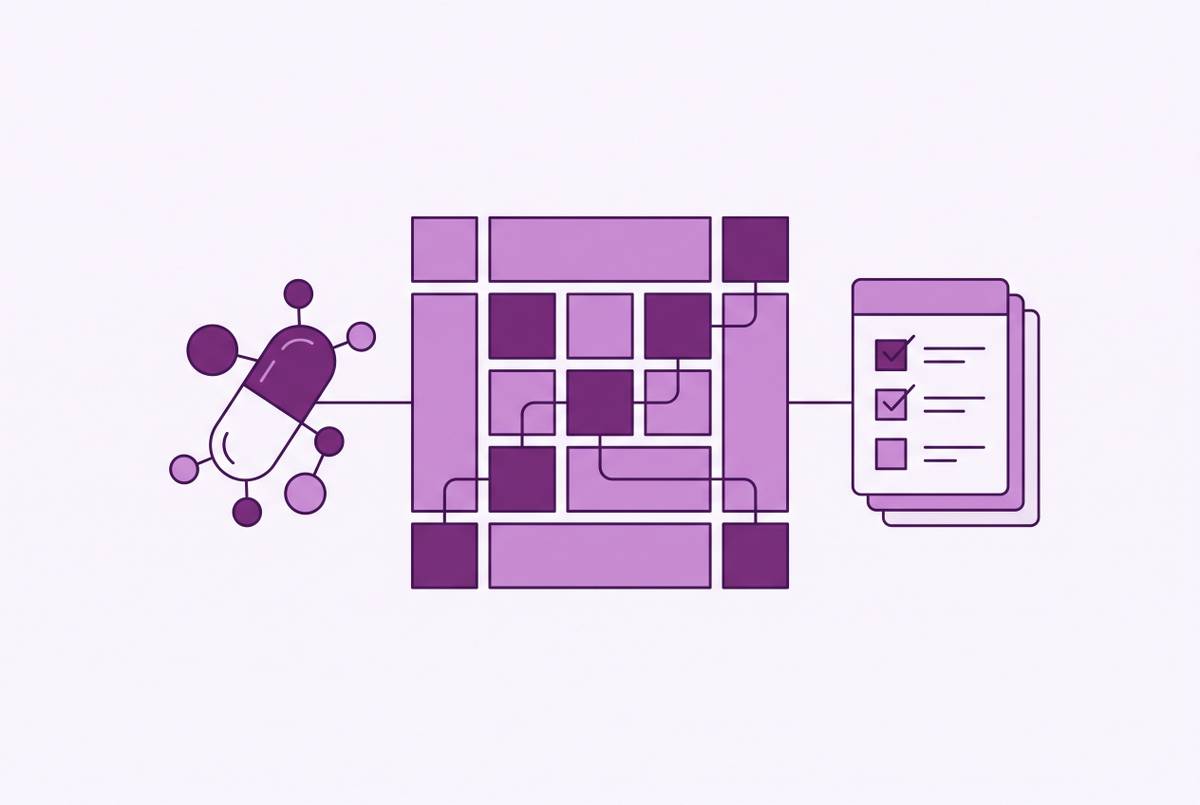
A viable CLM stack takes five layers: CRM, an eDetailing platform or CLM, digital asset (DAM) or content tools handling modular MLR-approved assets, customer data platform (CDP) or marketing automation, plus an analytics layer linking everything.
Most implementations underestimate how much must feed into the five layers before they matter. HCP data needs a solid source, like IQVIA OneKey, Veeva OpenData, Symphony, or Definitive. data has to come from IQVIA Xponent, Komodo, or Symphony PHAST. MLR content typically sits in Aprimo or Veeva Vault PromoMats. Aggregate payment data goes through Porzio or MediSpend. Mapping sales areas relies on Javelin or MicroStrategy, while payouts run via Varicent and Axtria SalesIQ. A central data setup, or CDP layer creates, the unified base the full stack relies on, with a data platform like Databricks or Snowflake for heavier analytics.
Each of those links is a place where the loop can fail. Five disconnected platforms, DTC Adobe Analytics, Google Ads, Veeva CRM, Veeva Vault PromoMats, and IQVIA prescription data, lacking unified attribution, caused misallocation of funds. Nobody built a broken one. Nobody built one setup at all.
The market's reaction has been consolidation. PharmaForceIQ's January 2026 purchase of Aktana, uniting field with marketing orchestration, signals where the sector is going. Veeva already tops pharma CRM with its CLM, MSL oversight, and consent features. It released the Content Agent and Quick Check Agent in December 2025 to hit the MLR review bottleneck squarely, and more are coming for clinical and other areas through 2026.
Aktana, Veeva CRM, and Indegene are established tools now, and sales visits get better when field teams use their guidance. Big platforms now offer a highest-ROI AI tool that's not flashy: it's generative pre-call planning summaries combining new Rx trends, payer changes, plus the last three engagements into one note any rep can check from their car. One example of this stack in action is Multiplier's AI architecture: the GenAI Doctor Data Platform sends unified HCP data to Veeva, the Agent Stack adds suggested next steps to the tools reps already use, the Hyper Personalized Content Platform adjusts MLR-approved materials, and a governance module keeps permission states consistent end to end. Purpose-built platforms like this often deploy within 8 to 12-week windows. Tailor-made systems take 6 to 12 mos. That gap alone should drive how a brand sets its CLM schedule.
Modular content production as the structural fix for the MLR bottleneck
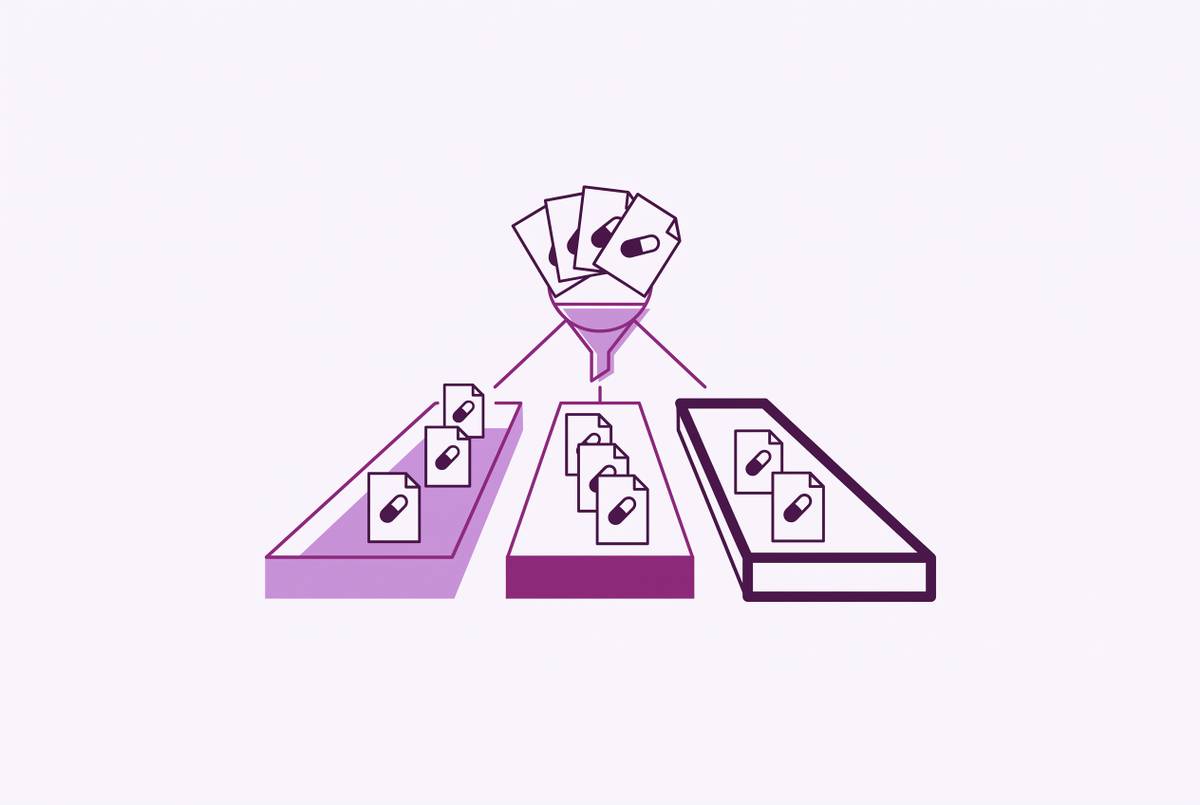
Modular content production cuts off the MLR bottleneck right at the root. Rather than making a fresh asset from zero for each region or audience, teams arrange content with a set taxonomy, tagging items by brand and use case, HCP type, core pillar, behavioral goal, initiative, evidence and sources, readiness for each channel, and local applicability. Create it, get approval once, then adapt it repeatedly rather than resubmitting versions of the same content.
Automatic tagging systems can classify and tag assets in under 45 seconds, easing the squeeze between output and review cycles. It's not just for show. It counters the earlier volume-versus-review-duration squeeze: when content volume grows while tagging and routing become faster, the bottleneck loosens without changing MLR headcount. Indegene's partnership for a top-10 pharma brand proves what's achievable: AI-driven deconstruction of current content helped staff tag more than 200,000 pages spanning 30 countries plus 18 languages, slashing tagging hours by 85%.
Veeva's PromoMats 25R3, 2025, introduced a Quick Check Agent that screens content for style, branding, market fit, channel rules, and regulatory issues ahead of any human MLR review. This cuts into cycle length head-on, not a peripheral extra.
Modularity's real payoff is personalization that can actually survive compliance scrutiny. A busy heart doctor may get content unlike a family doctor who rarely orders medicine, made from the same cleared parts, under the same brand standards. This setup is what makes the content valuable enough for a rep to open, which is ultimately what gets people using it. Templated production puts brand rules embedded into the component level, so teams execute content for their audience without creating off-label exposure, because guardrails stay inside the template, not a compliance memo.
Rules in this environment are only tightening. The EU AI Act takes effect in 2026, bringing fresh disclosure demands, though high-risk AI obligations are deferred until December 2027. The FDA put out guidance in January 2025 covering scientific info on unapproved applications, then moved in September 2025 against deceptive DTC ads such as influencer content. Modular workflows, with compliance built at the component level instead of bolted onto an asset, are positioned more strongly to absorb rules like these versus monolithic production pipelines built for one-off approvals.
How real-time HCP signals close the feedback half of the loop
The loop's feedback half is about responding to behavioral signals live, not holding off until a quarterly review to catch them. Put simply, most teams using CLM deployments still miss the point.
An HCP labeled a B-segment doctor lingers over the data in a meeting, then orders a care starter pack and seeks an MSL callback. During a visit, an HCP classified low-potential as a B-segment physician spends unusually long engaging over clinical data, requests the patient support kit, and seeks follow-up from a science liaison (MSL). A functioning setup marks that HCP to move up a level right away, instead of holding out for the upcoming refresh of quarterly segmentation. That alert, raised and dealt with almost instantly, is what feedback closure really means in practice.
The information environment that HCPs work in has shifted, too. Pharma Forward's 2026 report showed Many physicians now use AI tools in their clinical work, with a growing number trust AI for specific recommendations. According to an IntuitionLabs report, just 27% of HCPs see pharma's own messaging as pertinent. Live audience sorting is built to fix that precise disconnect.
The proof is clear when reps actually use this. Almirall set up Aktana on a pair of US dermatology products, getting 86% user adoption from reps and holding regular feedback meetings to refine the AI rules using real-world data. OptimizeRx's DAAP platform logged a 19% jump in scripts for one brand among the physicians it focused on, a real-world gain rather than an on-paper bump. Adoption is the deciding factor here: only when reps act on next-best-action recommendations does the loop work.
MSLs play an increasingly important role in providing scientific information to HCPs. Feedback closure must run through MSL workflows instead of ending at rep CRM records, otherwise the loop captures just half of what a brand actually shares with a physician. And the metrics used for all this should leave call volume plus reach frequency behind, linking rep skill with what actually occurs in prescribing afterward.
What the rep does when the loop is working
The era of rep-as-sole-messenger is over. Digital channels now account for a large share of HCP interactions, while Veeva's data shows a 7% year-on-year reduction in in-person HCP visits. Firms with strong inbound digital channels are watching many HCP interactions have shifted to digital channels.
That doesn't make reps obsolete. It redefines their role. Inside a functioning loop, reps become one path among many, human and non-personal, with an orchestration layer coordinating everything so no one person owns the customer. Field teams are being rebuilt to focus on what AI truly can't do: building strong connections, guiding clinicians through tough treatment choices, and reaching doctors who refuse any digital channel.
Pre-call planning puts Rx trends with payer changes plus the last three engagements in one readable view, making it the highest-ROI AI for field teams right now because a rep's face time gets more clinically useful, not replaced. Face time still counts enormously: a Pharma Forward report found 83% of people rely on their doctor over any other information. That one figure makes the case for focusing rep time where it matters clinically, instead of spreading it evenly over a territory no matter the upside.
The metrics used to judge reps have to keep pace with this. The right setup covers clinical fluency, how well reps handle objections, compliance adherence, and how these tie to downstream prescribing. Reach frequency and call volume don't, since they count actions instead of outcomes. McKinsey's view of omnichannel maturity ties measurable increases in sales, marketing output, prescriber uptake, and HCP experience to companies at that maturity level, since the loop can attribute a rep's role to a real result.
AI visibility in the clinical information environment: what GEO and AEO mean for CLM strategy
Search looks different now. Some industry observers have suggested traditional search engine volume may decline as new tools emerge, and Writer confirms the prediction came true. Between rep visits, HCPs now turn to generative AI for information instead of a search engine.
A growing number of HCPs are incorporating AI tools into their clinical workflows, including drug info, trial summaries, and treatment‑guideline alignment. Science says ChatGPT alone gets roughly 230 million health-related queries each week. Verified physicians send tens of millions of queries to OpenEvidence, a clinical AI platform built for their use, driving roughly 27 to 30 million clinical interactions each month. CLM content today competes in an information environment that reaches far beyond search.
That growth sparked a whole field: Generative Engine Optimization, or GEO, plus Answer Engine Optimization, known as AEO, where structuring content gets tools like ChatGPT, Perplexity, and Claude to actually cite a brand while handling clinical queries, including through Google AI Overviews. Traditional search plays by its own rules around sourcing, citation, and content setup. Google still has much more search volume than all these AI tools together, so GEO isn't a substitute for SEO. CLM teams must now account for this extra channel on top of the first.
This ties straight into CLM. When an HCP's mind is made up by an answer from AI before the rep arrives, the content in that detail must be calibrated to their existing views, not to generic materials prepared earlier. Over time, feedback closure has to grow to bring in AI-mediated HCP signals next to engagement data gathered during calls, since a physician's information path no longer begins with the rep. It begins with the last search that gave them an answer they kept.