HCP engagement after the rep: what field teams and digital channels each still do better
Field reps and digital channels each solve different engagement problems.
The pharmaceutical and medical device industries spent roughly two decades asking the wrong question. The field rep versus digital debate consumed strategy meetings, vendor pitches, and executive off-sites, and the answer, now that most of the dust has settled, is anticlimactic: the rep survives, but the role is fundamentally different. What actually matters for commercial strategy is understanding what each channel does distinctly well, and deploying both accordingly. Most organizations are still not doing that.
The Persistent Temptation to Pick a Side
There are two failure modes, and most commercial organizations have lived in one of them.
The first is inertia. Field teams persist at historical headcount because relationships are real, because leadership came up through the field, because it feels wrong to pull resources from something that demonstrably worked for decades. The second is overcorrection. Digital scales cheaply, generates dashboards, and feels like progress. So investment shifts, field teams shrink, and someone in marketing declares that personalized email journeys have replaced the detail.
Neither instinct produces meaningful HCP engagement on its own. I have watched both play out. The organizations that run purely on field legacy eventually hit a wall when access collapses and they have no alternative infrastructure. The ones that swing hard to digital learn, usually painfully, that click-through rates on a medical education email do not move a formulary decision.
The truth sitting underneath both failure modes is that these channels have genuinely distinct competencies. Pretending otherwise is expensive.
What the Rep Still Does That Nothing Else Replicates
Clinical Conversation That Actually Moves
A rep who has spent three years calling on the same interventional cardiologist knows something an email sequence cannot know: how that particular physician thinks about risk, what she is skeptical of, and when she is genuinely curious versus politely tolerating the visit. That situational knowledge shapes every sentence of the conversation in real time. When hesitation surfaces in a question, a skilled rep hears it and adjusts. She responds to what is actually being asked, not what the system anticipated would be asked.
Complex clinical content, mechanisms of action involving multiple pathways, nuanced patient selection criteria, data that requires interpretation rather than just presentation, lands better in that kind of exchange. The back-and-forth is not incidental. It is the point. Questions expose assumptions. Objections reveal where the clinical picture is not yet clear. A digital asset delivers its content and waits. A good rep handles the objection in the room, and sometimes the objection is the most useful thing that happens in the entire engagement cycle.
Trust That Compounds Over Time
Physician-rep relationships are not purely transactional, even now, even with access restrictions tightening across institutional systems. When a label changes, when a concerning post-market signal surfaces, when a patient case gets complicated and a physician needs a rapid, credible answer, they reach for someone they trust. That trust is built through consistency and accuracy over dozens of interactions. It is not manufactured by a campaign.
High-complexity accounts know this in their bones. Academic medical centers and large health systems have seen every flavor of promotional outreach. Their tolerance for impersonal communication is low precisely because the stakes of their clinical decisions are high. Field engagement at those accounts is not a habit; it is the appropriate instrument for what those conversations actually require.
Navigating Institutional Complexity
A hospital formulary decision involves pharmacy leadership, P&T committees, department heads, sometimes hospital administration, and often a clinical champion who needs internal air cover before she will advocate publicly. Digital channels can support awareness at the periphery of that process. They cannot orchestrate it. The orchestration requires a human who has mapped the institution, understands where decision authority actually lives (which is frequently not where the org chart says it does), and can move through stakeholder dynamics that shift week to week.
That is account management in the real sense of the phrase. It is categorically different from sampling calls, and it scales poorly through automation. Anyone who has tried to template their way through a formulary process at a major health system has learned this the hard way.
What Digital Does Better
Reach Into Access-Restricted Prescriber Populations
The erosion of physical access is real, persistent, and, for large portions of the prescriber universe, probably permanent. Pandemic-era restrictions accelerated trends that were already underway. Many institutions formalized limited-access policies that have not reversed. A significant portion of prescribers who matter commercially will simply never sit across from a rep again, or will do so rarely enough that field coverage alone cannot maintain meaningful share of voice.
Digital closes that gap. Email, approved content through platforms like Doceree or Veeva Vault PromoMats-compliant channels, targeted medical media, and self-serve portals reach physicians on the physician's schedule. For a mid-tier prescriber with occasional relevance to a therapy area, a well-timed, well-targeted digital touchpoint serves both parties better than a scheduled visit neither side is particularly motivated to have.
Speed and Consistency When It Matters
A label update or a newly published dataset requires rapid, consistent deployment across the entire commercial universe. A field force needs training cycles, updated materials, coordinated rollout logistics. That takes weeks. Digital can push compliant, consistent messaging across the full HCP target list in a fraction of that time, and consistency matters here beyond just speed: every rep conversation introduces interpretive discretion. Over a field force of hundreds, that discretion accumulates into meaningful variability. Centralized digital content, by design, does not have that problem.
Behavioral Signal That the Field Cannot Generate on Its Own
This is where digital holds a genuine advantage that most organizations are still squandering. Every physician interaction with a digital asset produces data: what was opened, how long it held attention, what was clicked, what was abandoned. Aggregated and analyzed with any rigor, that behavioral data surfaces patterns invisible to field teams operating in discrete call windows.
Which physicians are consuming disease-state education but ignoring product content? Which are engaging with competitive clinical data? Which accounts went quiet after a period of high activity, suggesting a change in clinical interest or formulary status? Those signals are valuable, and not just for digital optimization. Routed intelligently to the field, they transform the rep's next call. She arrives with context that would otherwise require multiple unproductive conversations to develop. The best commercial organizations I have seen treat digital not merely as a channel but as an intelligence layer that sharpens field engagement. Most organizations collect the data and route it nowhere useful.
On-Demand Access for Physicians Who Prefer to Pull
The preference among physicians for self-directed information access is growing, not shrinking. They want to pull content on their own terms, not absorb it on a rep's call cycle. A well-designed digital resource is available at 10pm when a physician is reviewing a complicated case and surfaces a clinical question. A rep is not. Portals, on-demand medical education content, and interactive data tools serve a genuine and expanding need that field coverage structurally cannot meet.
Where Integration Actually Breaks Down
The most common failure I have seen is treating these channels as parallel tracks sharing a target list but operating independently. The field team runs its call cycle. The digital team runs its content calendar. The two inform each other quarterly at best, usually through a slide deck summarizing each channel's own metrics. A physician receives an email about a product, then a rep call with a different message emphasis, then a congress touchpoint with a third framing. None of it feels orchestrated because it is not.
The second failure is measurement. Reach and frequency metrics made sense when reps were the primary vehicle for all HCP communication. Applying those same blunt instruments to digital, or trying to measure field effectiveness with digital engagement metrics, produces category errors that compound into bad allocation decisions. A field team evaluated on digital-style engagement scores will chase the wrong behaviors. A digital campaign measured on field-style call equivalent metrics will optimize for volume over signal quality.
The underlying problem is almost never technological. The tools for genuine omnichannel integration exist; Veeva, Salesforce Health Cloud, IQVIA's engagement platforms, none of them are the bottleneck. The bottleneck is strategic and organizational. It requires someone to own the full engagement architecture across channels, make deliberate choices about which channel serves which purpose at which point in the prescriber journey, and hold both accountable to shared commercial outcomes rather than siloed channel metrics.
Without that ownership, integration stays on slides and off the ground.
What Coordination Looks Like When It Works
The rep's call planning is informed by digital engagement data. A physician who completes a disease-state education module gets routed toward a conversation about patient identification criteria, not another email about a mechanism of action she has already engaged with online. The rep's post-call notes feed back into digital targeting logic so the campaign stops pushing content the physician has already moved past.
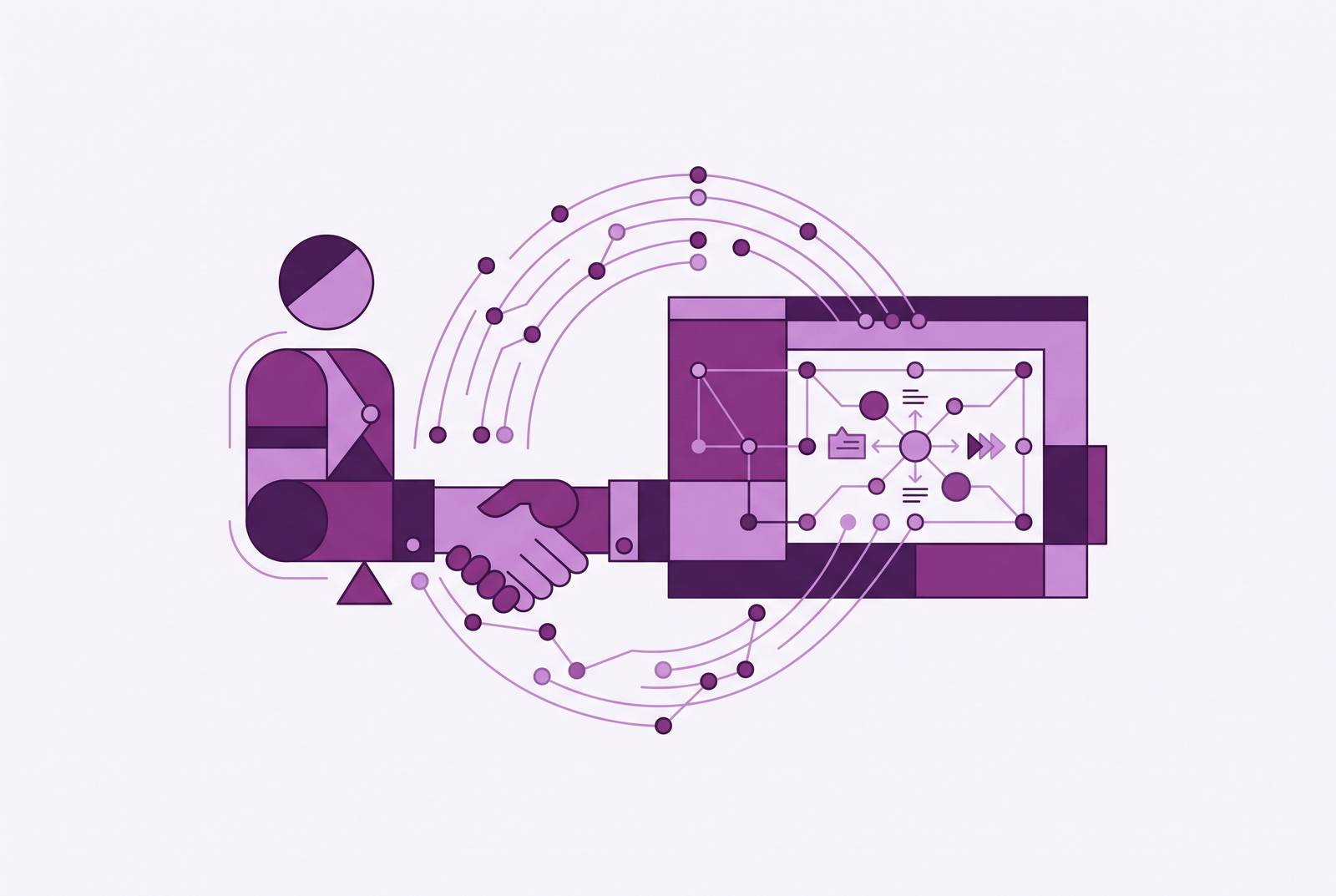
That loop, digital generating signal, field acting on it, field activity reshaping digital targeting, is the commercial infrastructure that actually produces coherent HCP engagement. It is not complicated in concept. It is hard in execution because it requires channel owners to relinquish some autonomy, share data in real time, and accept that their individual channel's performance matters less than the aggregate commercial outcome.
The organizations that have built that infrastructure are not asking whether the rep or the digital channel is more effective. They stopped running that race. Each channel makes the other more precise, and that precision is where competitive advantage actually lives right now.